Literally translated, the above expression means “You are the milk!” A little strange, no? Well colloquially, the phrase means “You are the best!” In Spain, leche (milk) is often used as an euphemism or in slang phrases that make no literal sense. The more you know!
While we’re speaking about drink, we might as well discuss food too! That’s right — it’s the long-awaited post on Spanish cuisine!
I’m going to break down this post into the three different meals of the day, plus any other fun food facts that I’ve encountered in the past month!
Breakfast
Breakfast is generally lighter here than it is in the United States. A typical Spanish breakfast can include toast with ham, cheese, and tomato paste, a croissant, or yogurt (but not the sweet stuff we have in the US).
Normally, I have cereal for breakfast, but when I go out for breakfast I go to one of the many cafes they have here. I’ve found one that has pancakes and another that has bagels (both of which I will definitely being going back to try). It will be interesting to see how different they are from what we have.
Funny story: one night for dinner, my host mom made me fried quail eggs, french fries, bacon, and a fried pepper. When I told her that the meal resembled a typical American breakfast, she was very surprised. She couldn’t imagine eating something like that for breakfast!
Here are some of my breakfasts out:

A croissant & lemon macaroon from McDs 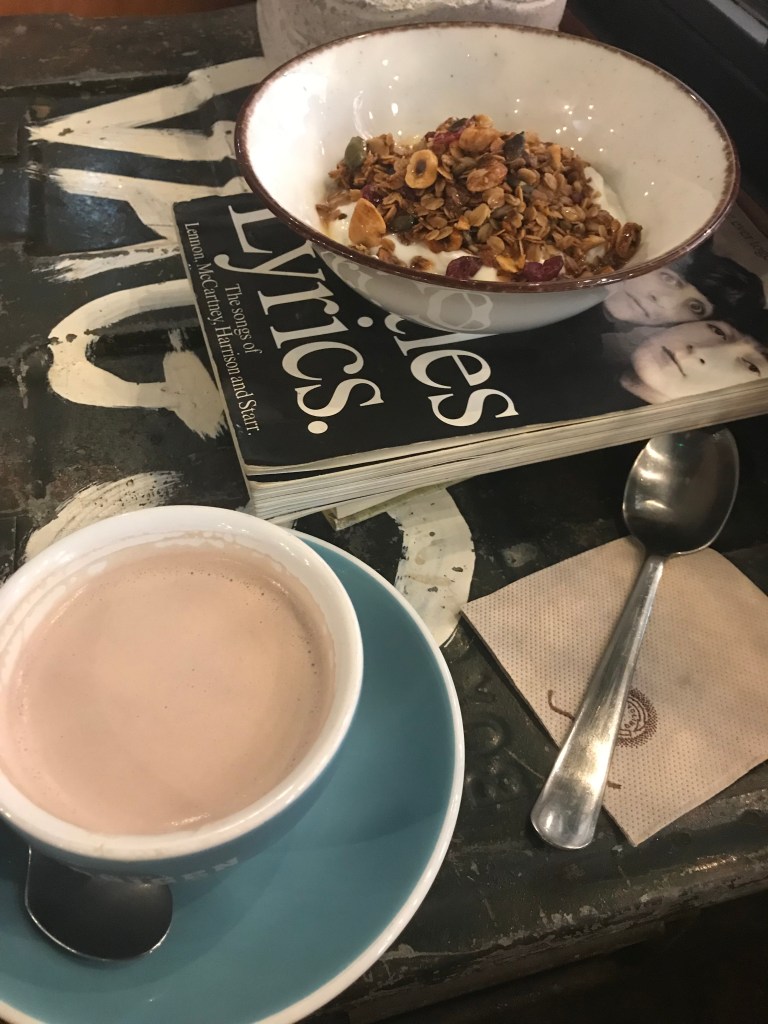
Hot chocolate & yogurt with oats 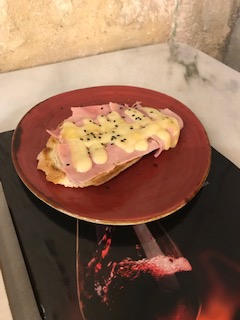
Toast with ham & cheese 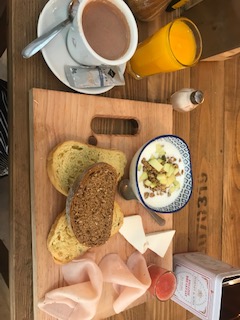
Spread with toast (with dressings) & yogurt 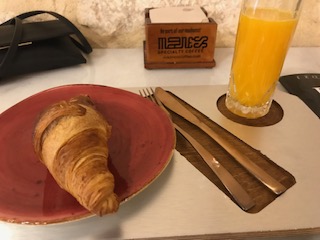
Croissant & fresh squeezed orange juice
Lunch
Typically the heaviest meal of the day, lunch is normally served around 2:30-4 pm. Since for me lunch is right after classes and right before siesta (read: homework) time, I normally eat lunch at my homestay. As such, my lunch experiences have normally been whatever my host mom has served me (and thus I don’t have pictures).
Soups (with any combination of meat, lentils, peas, potatoes) are a very common meal, as well as pasta. Meatballs are also very popular, served with rice. When I have classes later in the day, I take a sack lunch with fruit and a bocadillo (which I’ve discussed in a previous post).
Very delicious, but very heavy foods. After lunch, I’m definitely ready to slip into a food coma/siesta!
Dinner / Tapas
Dinner is normally eaten between 8:30 to 11 pm. It’s very late! Dinner is typically less filling than lunch, but still a significant meal.
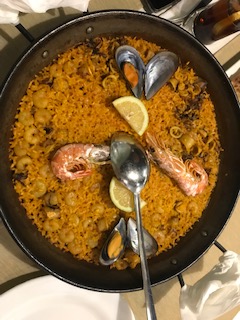
We’ll start with perhaps the most well known Spanish dish: paella.
Paella is a yellow rice dish that is loaded with anything from red peppers to shrimp to lobster to chorizo (the closeness to the sea is what makes it primarily a seafood dish). It’s prepared in a giant pan, so it’s usually a dish you want to share with friends.
Although paella is a highly recognizable Spanish dish, however, it’s not commonly found in all parts of Spain (just like grits aren’t commonly found all over the United States). The interior of the country, where there isn’t close access to water, doesn’t have paella as a main dish.
Regardless of its availability throughout the country, it is very delicious and very colorful!
Next, it’s very common to simply go out for tapas for dinner. Remember the cooking class that I took? Well, I’m finally going to explain what the rest of those tapas were, which are some of the most famous types of tapas in Spain.
Here’s the photo for a refresher:
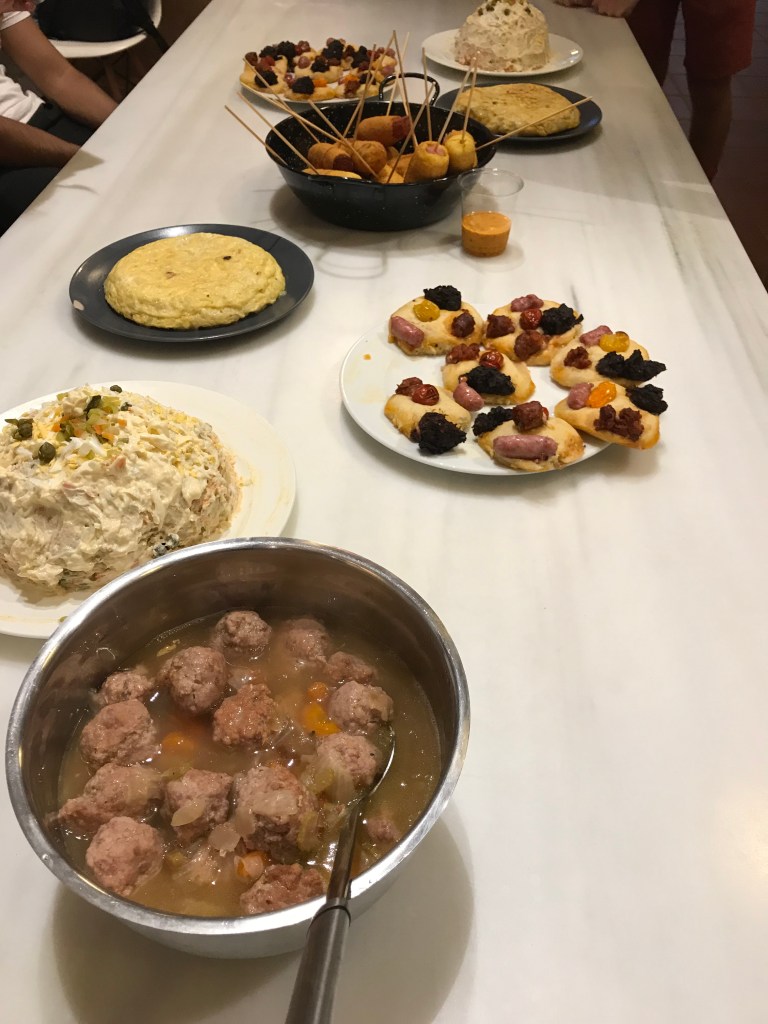
Starting from the bottom of the picture up:
- Meatballs (I believe I’ve already discussed these a little)
- Ensalada rusa (a cold salad that has tuna, mayo, potatoes, and cabbage)
- Bread with blood sausage and dried tomatoes
- Tortilla (eggs, onion, and potatoes — not a Mexican tortilla)
- Croquetas (like a corndog, can also be filled with cod and garlic)
- MISSING: Empañadas (pastry stuffed with warm tuna, egg, and onion)
Some other tapas include: fried anchovies, slices of ham, and patatas fritas (french fries).
A note: beware! Spaniards love their salt. Most everything here is very, very salty, which just takes some getting used to.
And here are some of the meals that I’ve had at my homestay, which are also classic Spanish meals:
- Open and cooked eggplant with ground meat and sandwich cheese on top
- Arroz a la cubana (rice with a fried egg in the center and tomato paste sauce surrounding it)
- Rice with tomato sauce, calamari, and tiny shrimps
Other Food Tidbits
Spain is known for their citrus, so I’m lucky enough to be able to have fresh squeezed orange juice both at my homestay and at all the restaurants that I visit.
Being relatively close to both France and Italy, there is a lot of bakeries and Italian restaurants here! I might do another blog on those foreign cuisine influences!
Super long post, but hopefully you enjoyed it and got a little taste of what the food is like here in Spain!
Remember, ¡eres la leche!
¡Hasta luego!
— Grace
 Where in the World Is Grace Elizabeth?